The 15 Best Self-Improvement Books (Ranked by What Actually Works)
We read and distilled the most recommended self-improvement books of all time. Here's what each one actually delivers — and who it's really for.
Most self-improvement books repeat the same three ideas in two hundred pages. A handful don’t. This list is the handful.
We picked books that meet a simple test: after you finish, you can point to a specific change in how you think or act. No vague “unlock your potential” filler — just books that earn their reputation.
How we chose these books
Every book below clears three bars:
- Actionable — it gives you something concrete to do today, not just concepts.
- Enduring — it’s still recommended years (or decades) after publication.
- Specific — it’s written for a particular reader and problem, not everyone.
We organized them by theme so you can jump straight to what you need. And unlike most lists, we also tell you what each book gets wrong — a list where every book is perfect is an ad, not a recommendation.
Best books on habits

Atomic Habits
The modern standard for behavior change. Clear’s core argument is that you don’t rise to your goals, you fall to your systems — and then he hands you the system: tiny changes, stacked cues, and identity-based habits.
Takeaway: Make the good habit obvious and easy; make the bad one invisible and hard.
Best for: Anyone who has set the same New Year’s resolution three years running.
Skip if: you want a quick motivational read. This is a system to implement, not a pep talk — and it rewards re-reading, not skimming.
Honest take: The first half can feel familiar if you’ve read Duhigg or Fogg. It’s the second half — the four laws and how to reverse them — that earns the book its reputation.
Details: 2018 · 320 pages · audiobook available

The 7 Habits of Highly Effective People
The grandfather of the genre, and it has aged well precisely because it’s not about hacks. Covey builds a character framework — be proactive, begin with the end in mind, put first things first — that most modern books quietly borrow.
Takeaway: Effectiveness is an inside-out job: change your character, not your tactics.
Best for: Readers who want principles that hold up over a lifetime, not tricks.
Skip if: you’re allergic to slightly dated corporate language and parables. The book reads like a business seminar, not a modern blog post.
Honest take: It’s denser and slower than it needs to be, and some of the stories feel dated. But the underlying framework has outlived thousands of trendier books.
Details: 1989 · 432 pages · audiobook available

The Power of Habit
The most readable book on the neuroscience of why habits form. Duhigg’s cue-routine-reward loop explains everything from your coffee ritual to corporate culture, and it’s the reason so many later habit books exist.
Takeaway: You can’t delete a habit — but you can swap the routine while keeping the same cue and reward.
Best for: People who like understanding the why before the how.
Skip if: you want a practical, step-by-step system. This is journalism first, manual second — great stories, less hands-on instruction.
Honest take: The case studies (Febreze, Target, Alcoholics Anonymous) are fascinating but sometimes overreach. Treat the science as a lens, not gospel.
Details: 2012 · 400 pages · audiobook available
Best books on mindset

Mindset
Dweck’s fixed-versus-growth mindset is the single most useful lens in this entire list. One idea, rigorously explained: what you believe about your abilities shapes everything you attempt — and you can change the belief.
Takeaway: Praise effort and process, not “being smart,” and treat failure as data.
Best for: Parents, teachers, and anyone who’s afraid of looking stupid.
Skip if: you want a fast, actionable read. This is a research book built around one idea, and it repeats that idea a lot.
Honest take: The growth mindset concept has been oversimplified (and, frankly, overhyped) since publication. Dweck herself warned against “false growth mindset.” Read the source, not the summaries.
Details: 2006 · 320 pages · audiobook available

Grit
A direct challenge to the talent myth. Duckworth’s research shows that passion and sustained persistence beat raw ability over the long run — and that grit is more malleable than you’d expect.
Takeaway: Effort counts twice: it builds skill, and it makes skill productive.
Best for: Anyone discouraged by comparing themselves to “naturally gifted” peers.
Skip if: you’re looking for tactical advice. Grit explains why persistence matters more than how to build it — that’s a different book.
Honest take: The core finding is solid but narrow. The book has been critiqued for overstating how much grit alone predicts success, especially in a society that doesn’t start everyone at the same line.
Details: 2016 · 352 pages · audiobook available
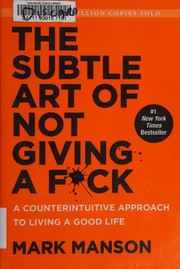
The Subtle Art of Not Giving a F*ck
A deliberately crude title hiding a genuinely counterintuitive point: you only have so many f*cks to give, so choose them carefully. Manson flips the positivity script — the goal isn’t to feel great, it’s to solve better problems.
Takeaway: You can’t care about everything. Pick your values, then accept the struggle that comes with them.
Best for: Readers tired of toxic positivity and looking for blunt honesty.
Skip if: you dislike profanity or want depth. The ideas are good but recycled from older philosophy (Buddhism, Stoicism) with a marketing-friendly wrapper.
Honest take: The book is a repackaging of well-worn ideas, and a chunk of it is blog posts stitched together. Still, the reframe — “choose your problems” — is genuinely useful if it’s your first time meeting it.
Details: 2016 · 224 pages · audiobook available
Best books on focus and productivity
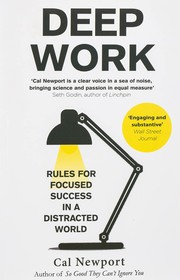
Deep Work
Newport’s argument is that the ability to focus without distraction is becoming rare — and therefore increasingly valuable. The book then teaches you, step by step, how to build a deep work practice.
Takeaway: Schedule deep work like a meeting, protect it, and treat shallow work as the tax it is.
Best for: Knowledge workers drowning in notifications and “busy but not productive.”
Skip if: your job genuinely requires constant responsiveness. Deep Work assumes a job where long, uninterrupted blocks are possible — which isn’t everyone.
Honest take: The rules skew toward a specific type of professional (programmers, writers, academics). For shift workers, managers, or parents, the advice needs heavy adaptation.
Details: 2016 · 304 pages · audiobook available

The One Thing
The simplest productivity question you’ll ever learn: “What’s the one thing I can do such that by doing it, everything else becomes easier or unnecessary?” Keller builds an entire system around that question.
Takeaway: Focus is a domino effect — find the lead domino and knock it over first.
Best for: Overwhelmed people with too many goals and no clear priority.
Skip if: you want research-backed rigor. The book leans on anecdote and the “focusing question” more than evidence.
Honest take: The core question is genuinely powerful, but the book pads it with a lot of filler and repeated examples. The idea could have been an essay — which is both a weakness and, arguably, the point.
Details: 2013 · 240 pages · audiobook available

Essentialism
The discipline of doing less, but better. Essentialism is a framework for deciding what matters and systematically saying no to everything else — the opposite of the “do it all” culture most of us live in.
Takeaway: If it isn’t a clear yes, it’s a no.
Best for: High performers who keep saying yes and are burning out because of it.
Skip if: you’re not in a position to say no. Essentialism assumes agency — a luxury that junior employees, caregivers, and people in survival mode often lack.
Honest take: The message is timely and well-argued, but it can read as privileged — “just say no” is easier when you have options. Still, the question it teaches (is this essential?) is worth the price alone.
Details: 2014 · 272 pages · audiobook available
Best books on purpose and meaning

Man's Search for Meaning
The only book on this list written from inside a concentration camp. Frankl, a psychiatrist, observed that those who survived weren’t the physically strongest — they were the ones with a reason to live. Out of that came logotherapy.
Takeaway: You can’t always choose your circumstances, but you can always choose your response to them.
Best for: Anyone facing suffering, uncertainty, or the question of “why keep going.”
Skip if: you want a light or “how-to” read. The first half is a harrowing memoir; it asks something of you.
Honest take: The second half (the theory of logotherapy) is drier and less compelling than the memoir. Some readers find the leap from experience to psychological theory abrupt. Read it for the memoir; treat the theory as a bonus.
Details: 1946 · 200 pages · audiobook available

Start With Why
Sinek’s “golden circle” — why, how, what — explains why some leaders and companies inspire while others only transact. It’s a book about purpose that applies to careers, teams, and products alike.
Takeaway: People don’t buy what you do; they buy why you do it.
Best for: Leaders, founders, and anyone who wants to work with more conviction.
Skip if: you’re an individual contributor looking for personal development. This is a leadership/organizational book more than a self-help one.
Honest take: The “golden circle” is a compelling metaphor, but the book stretches it thin — a great TED talk expanded into a full book. The core idea is worth ten minutes; the book is a few hours.
Details: 2009 · 256 pages · audiobook available
Best books on relationships

How to Win Friends and Influence People
Published in 1936 and still the best book on people ever written. Carnegie’s advice — become genuinely interested in others, remember their names, never criticize — sounds simple and is devastatingly rare in practice.
Takeaway: Influence isn’t manipulation; it’s making the other person feel genuinely valued.
Best for: Literally everyone. This is the highest-ROI book on the list.
Skip if: you’re looking for modern social skills (digital etiquette, networking online). This is pre-internet, and it shows.
Honest take: The examples are dated (1930s salesmen and letters), and the tone can feel quaint. But the principles — listen, remember names, avoid criticism — are as true now as they were then.
Details: 1936 · 288 pages · audiobook available

Daring Greatly
Brown’s research on vulnerability and shame reframes courage as showing up even when the outcome isn’t guaranteed. It’s the emotional counterpart to the more tactical books above.
Takeaway: Vulnerability isn’t weakness — it’s the birthplace of connection and creativity.
Best for: People who struggle with perfectionism, shame, or asking for help.
Skip if: you want a quick, practical read. Brown’s style is warm but discursive; the actionable parts are buried in narrative.
Honest take: The book could be a third shorter, and the word “vulnerability” gets stretched to cover a lot of ground. But the reframe — that courage requires risk, not armor — is foundational.
Details: 2012 · 320 pages · audiobook available
Best books on thinking
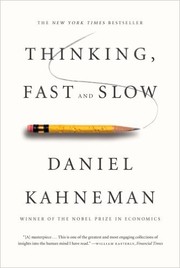
Thinking, Fast and Slow
A Nobel laureate’s tour of the two systems driving your decisions: the fast, intuitive one and the slow, deliberate one. Dense, but it rewires how you see your own judgment — and everyone else’s.
Takeaway: Your gut is wrong in predictable ways. Knowing the biases is the first defense.
Best for: Curious minds who want the science beneath self-improvement.
Skip if: you want a breezy read. This is a 500-page psychology book, and parts of it are slow going.
Honest take: Ironically, several of the studies the book relies on (priming, ego depletion) have since failed replication. The framing — fast vs. slow thinking — is still invaluable, but treat the individual experiments with caution.
Details: 2011 · 499 pages · audiobook available
Best book on discipline

The Compound Effect
A short, blunt book with one massive idea: small choices, repeated consistently, compound into extraordinary results — in either direction. It’s the bridge between “habits” and “results.”
Takeaway: Success is a thousand tiny, unglamorous decisions. Consistency beats intensity.
Best for: Beginners who want a fast, practical read before diving deeper.
Skip if: you’re already sold on consistency. The book is one idea, restated many ways, and it leans on Hardy’s personal anecdotes.
Honest take: It’s padded — the core could be a long article. The examples (hard work, no shortcuts) can feel like hustle culture. But as a first read on discipline, it does its job.
Details: 2010 · 176 pages · audiobook available
More focused guides
Looking for something more specific?
- The best self-help books for men
- The best self-help books for women
- The best self-help books for beginners
- The best books on habits
- The best books on productivity
How to pick the right one for you
- Overwhelmed by goals? Start with The One Thing or Essentialism.
- Struggling to stick with anything? Start with Atomic Habits.
- Doubting your abilities? Start with Mindset.
- Feeling directionless? Start with Man’s Search for Meaning.
Don’t read all fifteen back to back. Pick one, apply it for a month, then move to the next. A single book applied beats a shelf full of unread ones.
Frequently asked questions
What is the best self-improvement book for beginners?
Atomic Habits by James Clear. It’s short, concrete, and immediately actionable — the lowest barrier to entry in the genre.
How many self-improvement books should I read?
Quality over quantity. One book a month, actually applied, beats three a week that you forget. The goal is behavior change, not a high reading count.
The bottom line
The best self-improvement book is the one you finish — and then use. Every title on this list earns its place by surviving years of real readers. Pick the one that matches your current struggle, and start there.