The 10 Best Self-Help Books for Men (That Don't Just Tell You to Grind Harder)
Practical, no-nonsense self-help books for men — on discipline, purpose, relationships and responsibility, without the toxic fluff.
A lot of “self-help for men” is just one idea — work harder, suffer more — repeated loudly. The books below go further. They’re about discipline, yes, but also about responsibility, relationships, and building a life you don’t need to escape from.
The list

Can't Hurt Me
Part memoir, part manual for building mental toughness. Goggins went from an abusive childhood and obesity to Navy SEAL and ultra-endurance athlete — and the book is a raw account of how.
Takeaway: The “40% rule” — when you think you’re done, you’re usually at 40% of your actual capacity.
Best for: Men who need a blunt kick to stop settling.
Skip if: you’re looking for balance or self-compassion. This is a book about pushing through pain, not healing it — and it doesn’t pretend otherwise.
Honest take: Goggins’ approach is extreme by design, and it’s not a healthy template for everyone. The accountability mirror and the 40% rule are useful; the “never take a rest day” ethos is not. Use it as fuel, not as a lifestyle.
Details: 2018 · 364 pages · audiobook available

12 Rules for Life
A controversial author with an undeniably useful core: order, responsibility, and meaning come before happiness. The rules are practical — stand up straight, tell the truth, compare yourself to who you were yesterday.
Takeaway: Take responsibility for your life before you try to fix the world.
Best for: Men who feel aimless or resentful and want a framework for self-respect.
Skip if: you want a focused, linear read. The chapters wander through myth, Bible stories, and psychology, and the writing can be dense and digressive.
Honest take: The book is bloated — the same advice exists in shorter, clearer books. But the first rule (“stand up straight with your shoulders back”) and the responsibility theme land for a reason.
Details: 2018 · 448 pages · audiobook available

Extreme Ownership
Two Navy SEAL officers apply battlefield leadership to business and life. The central idea — own everything in your world, even what isn’t your fault — is the antidote to the blame game.
Takeaway: No excuses, no blame. Own the problem and you can solve it.
Best for: Men in leadership roles, or anyone who wants to stop being a victim of circumstances.
Skip if: you’re not in a leadership or team context. The book is built around military and business leadership, and a solo practitioner may find less to use.
Honest take: The principle is strong, but the war stories are repetitive and the “leadership principles” blur together by the end. Skim the stories; keep the ownership mindset.
Details: 2015 · 320 pages · audiobook available

No More Mr. Nice Guy
A counterintuitive classic for men who over-give, avoid conflict, and secretly resent it. Glover’s “Nice Guy Syndrome” explains why people-pleasing backfires, and how to set boundaries without becoming a jerk.
Takeaway: Honesty and healthy self-interest build better relationships than silent resentment.
Best for: Men who say yes when they mean no, and wonder why they’re exhausted.
Skip if: you’re not the target reader. It’s specifically for recovering “Nice Guys” — if that’s not your pattern, it may not resonate.
Honest take: The book’s dated gender framing (and some questionable takes on masculinity) can be off-putting. But the core insight — covert contracts and resentment — is genuinely useful and rare.
Details: 2003 · 208 pages · audiobook available

Meditations
The private journal of a Roman emperor, written almost two thousand years ago — and still the best book on self-discipline ever produced. Stoicism in its purest, most personal form.
Takeaway: You control your judgment and your actions. Everything else is weather.
Best for: Men who want a daily source of calm and perspective, not motivation.
Skip if: you want a structured, modern self-help book. This is a collection of fragments, not a system — and it rewards slow, repeated reading.
Honest take: Not a page-turner, and not meant to be. Read it in small doses; treat it as a daily companion, not a book to finish in a weekend.
Details: ~180 AD · 254 pages · audiobook available

The Obstacle Is the Way
Modern Stoicism, distilled. Holiday argues that every obstacle is an opportunity to practice virtue — and gives historical examples to prove it. Short, sharp, and re-readable.
Takeaway: The thing standing in your way is the way through it.
Best for: Men facing a setback who need to reframe it as fuel.
Skip if: you want depth or original research. This is Stoicism repackaged with anecdotes — excellent as an introduction, thin if you’ve read the Stoics directly.
Honest take: Holiday’s later books cover the same ground repeatedly. This one is the best of the bunch, but know it’s philosophy-light and story-heavy.
Details: 2014 · 224 pages · audiobook available

The Way of the Superior Man
A polarizing but influential book on masculine purpose and polarity in relationships. Even if you take it with a grain of salt, its call to live with a clear direction — rather than drifting for approval — lands hard.
Takeaway: Purpose first; everything else follows from a life you’re actively building.
Best for: Men questioning their direction in work and relationships.
Skip if: you’re put off by spiritual language or essentialist gender framing. Deida’s worldview is very “1990s spiritual teacher,” and it shows.
Honest take: Parts of it haven’t aged well, and some advice about relationships is best taken with heavy skepticism. Extract the “live with purpose” core; leave the rest.
Details: 1997 · 224 pages · audiobook available

Atomic Habits
The habit book every man should read before the “grind harder” stuff. Clear shows that identity and systems — not raw willpower — are what actually change behavior.
Takeaway: Every action is a vote for the person you want to become.
Best for: Men who keep falling off every routine they start.
Skip if: you’ve already read it — it appears on several of our lists for a reason, but you only need to read it once.
Honest take: The most actionable habit book in the genre. If you only read one book from this list, make it this one.
Details: 2018 · 320 pages · audiobook available
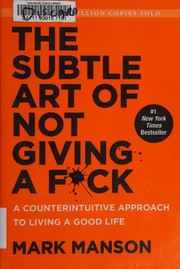
The Subtle Art of Not Giving a F*ck
The anti-hustle book. Manson’s message — you have limited f*cks to give, so choose them deliberately — is the antidote to the performative “grind” culture that burns men out.
Takeaway: Choose your values, then accept the struggle that comes with them.
Best for: Men tired of the hustle and looking for a healthier definition of success.
Skip if: profanity or a recycled-ideas feel bothers you. It’s a repackaging of older philosophy, dressed up for the internet.
Honest take: Short and punchy, but the ideas aren’t new. Still, the “choose your problems” reframe is exactly what a burned-out reader needs.
Details: 2016 · 224 pages · audiobook available

How to Win Friends and Influence People
Ninety years old and still the most practical book on people ever written. It’s not about manipulation — it’s about making others feel genuinely valued, which is the single highest-leverage skill a man can build.
Takeaway: Become genuinely interested in other people and they’ll respond in kind.
Best for: Every man. Full stop.
Skip if: you want modern, digital-era social skills. This is pre-internet advice with pre-internet examples.
Honest take: Dated stories, timeless principles. The examples feel quaint, but “remember their name” and “never criticize” are still the highest-ROI social skills there are.
Details: 1936 · 288 pages · audiobook available
Where to start
- Need a jolt of discipline? Can’t Hurt Me.
- Feel stuck and resentful? No More Mr. Nice Guy or 12 Rules for Life.
- Want calm, not noise? Meditations.
Pick one, finish it, apply it. Reading ten books is worthless compared to living one.
For the complete list across every category, see our guide to the best self-improvement books.