The 8 Best Productivity Books That Actually Get Things Done
Stop being busy and start being effective. These productivity books teach focus, prioritization and systems that survive the real world.
Most productivity advice is just fancier ways to stay busy. The books below are different: they’re about doing less, but better — focus, prioritization, and systems that hold up when your calendar is on fire.
The list
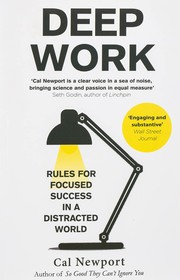
Deep Work
The modern case for focus. Newport argues that the ability to concentrate without distraction is becoming rare — and therefore increasingly valuable — then teaches you to build a deep work practice.
Takeaway: Schedule deep work like a meeting; treat shallow work as the tax it is.
Best for: Knowledge workers drowning in notifications and “busy but not productive.”
Skip if: your job requires constant responsiveness. Deep Work assumes long, uninterrupted blocks are possible — which isn’t everyone.
Honest take: Skews toward a specific professional (programmers, writers, academics). For managers or shift workers, the advice needs heavy adaptation.
Details: 2016 · 304 pages · audiobook available

The One Thing
The single most clarifying question in productivity: “What’s the one thing I can do such that by doing it, everything else becomes easier or unnecessary?” Keller builds a whole system around it.
Takeaway: Focus is a domino effect — find the lead domino and knock it over first.
Best for: Overwhelmed people with too many goals and no clear priority.
Skip if: you want research rigor. It leans on anecdote more than evidence.
Honest take: The focusing question is genuinely powerful; the book pads it with filler. An essay’s worth of idea in a book — but a very good idea.
Details: 2013 · 240 pages · audiobook available

Essentialism
The disciplined pursuit of less. Essentialism is a framework for deciding what matters and systematically saying no to everything else — the opposite of the “do it all” culture.
Takeaway: If it isn’t a clear yes, it’s a no.
Best for: High performers burning out from saying yes to everything.
Skip if: you lack the agency to say no. Essentialism assumes you have options.
Honest take: Can read as privileged — “just say no” is easier with options — but the question it teaches (is this essential?) is worth the whole book.
Details: 2014 · 272 pages · audiobook available

Getting Things Done
The grandfather of productivity systems. GTD’s core insight — your brain is for having ideas, not holding them — leads to a complete system for capturing and processing everything in your life.
Takeaway: Get everything out of your head and into a trusted system you review weekly.
Best for: People with a thousand loose ends and no reliable way to track them.
Skip if: you want a light read. GTD is a full system, and it takes effort to set up.
Honest take: Dense and jargon-heavy, and easy to over-engineer. But the capture habit — write everything down — is the most reliable anti-stress tool there is.
Details: 2001 · 352 pages · audiobook available

Eat That Frog
A short, direct book built on one habit: do your most important and most dreaded task first, before anything else. Simple, and brutally effective against procrastination.
Takeaway: If you have to eat a frog, don’t stare at it — eat it first thing.
Best for: Procrastinators who put off the hard stuff all day.
Skip if: you want depth. This is 21 quick tips, not a deep system.
Honest take: Light and a bit generic, but the “eat the frog first” habit is worth the price alone. A quick, practical read.
Details: 2001 · 144 pages · audiobook available

Atomic Habits
Productivity isn’t just about systems — it’s about the daily behaviors that make them possible. Clear’s habit framework is the foundation every productivity system sits on.
Takeaway: Small daily habits compound into the output that systems are designed to optimize.
Best for: Anyone whose productivity problems are really consistency problems.
Skip if: you’ve already read it on another of our lists.
Honest take: Not strictly a productivity book, but the missing layer beneath every system. If your system fails, it’s usually a habit problem — this fixes that.
Details: 2018 · 320 pages · audiobook available
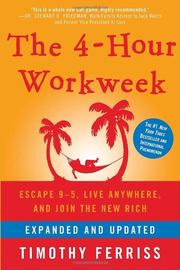
The 4-Hour Workweek
Polarizing but influential. Ferriss’ “lifestyle design” ideas — automation, the 80/20 rule, and questioning the 9-to-5 — are less a system than a mindset shift.
Takeaway: Question the default. More hours doesn’t mean more value.
Best for: People ready to rethink what work should look like.
Skip if: you want practical, evergreen tactics. Parts of the book are dated (specific tools, “geoarbitrage” advice) and the tone is very 2007.
Honest take: Half of it hasn’t aged well, but the mindset — automate, delegate, question the 40-hour assumption — is still provocative and useful.
Details: 2007 · 396 pages · audiobook available

Free to Focus
A system built on the insight that you can’t do everything — but you can do the right things. Hyatt’s “productivity funnel” helps you eliminate, automate, and delegate so you can focus on what only you can do.
Takeaway: Productivity is doing the right things, not more things.
Best for: Leaders and busy professionals who feel spread too thin.
Skip if: you want secular, neutral tone. Hyatt’s faith is present in places.
Honest take: The “productivity funnel” is a clean, memorable framework, though it overlaps with Essentialism. The delegation focus makes it most useful for managers.
Details: 2019 · 256 pages · audiobook available
Where to start
Overwhelmed? The One Thing or Essentialism. Distracted? Deep Work. Disorganized? Getting Things Done. Pick one, implement it, then layer the next — a single system applied beats a shelf of unread ones.
For the complete list across every category, see our guide to the best self-improvement books.